
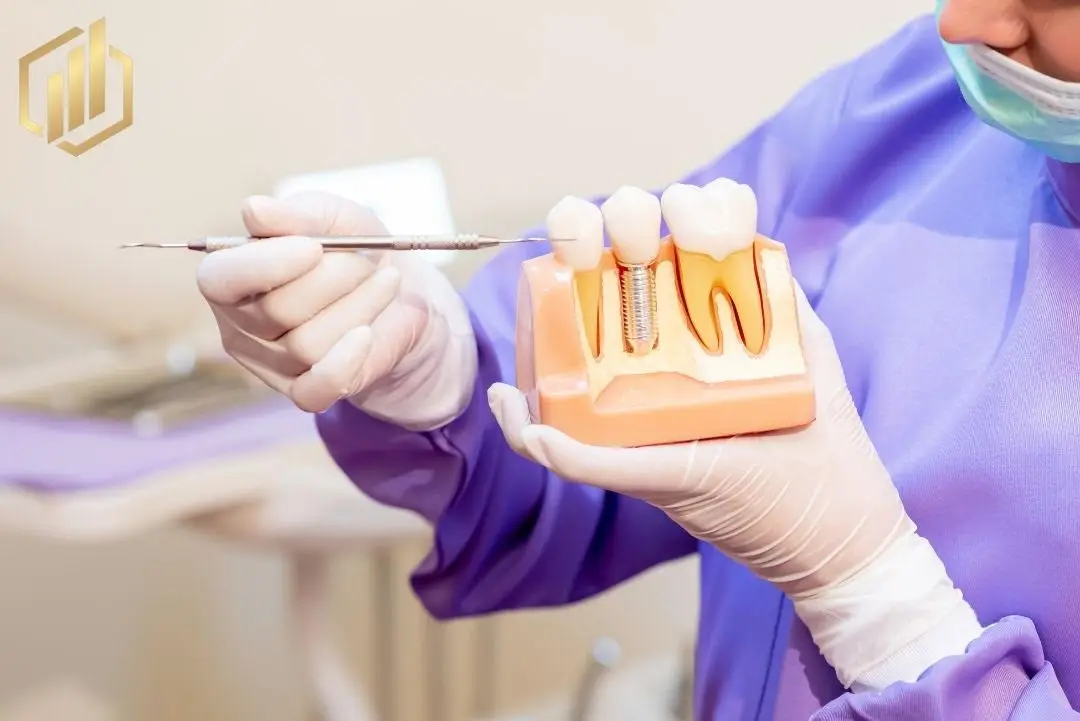
A dental clinic has more moving parts than most small businesses: treatment income, dental supplies, equipment that depreciates, visiting dentists paid by fee, and staff on payroll. This guide explains how clinic accounting and tax work in Thailand, and how we set up the books for clinics run by foreign and Thai owners alike.
Accounting and tax services for dental clinics
We have more than 10 years of experience keeping accounts for dental clinics. Our work falls into three areas.
1. Accounting and tax system setup
- Set up accounting to match how your clinic actually operates
- Create a chart of accounts designed for a dental practice
- Plan tax within the law (see our tax planning service)
- Organise accounting documents so they satisfy the Accounting Act B.E. 2543 (2000), Sections 8, 9 and 12 (keeping accounts and supporting documents)
2. Recording transactions
- Record income from dental services (see bookkeeping)
- Record medical and dental supply expenses
- Record fees paid to dentists who are not employees. For an individual dentist, these fees are assessable income under Section 40(6) of the Revenue Code (liberal professions, including the healing arts)
- Maintain a register of medical supplies and equipment, so that depreciation follows Royal Decree No. 145 (B.E. 2527)
3. Financial reporting
- Monthly and annual financial statements
- Performance and financial ratio analysis
- Service cost reports
- Performance comparison reports
Tax and legal basics for a dental clinic
Corporate income tax
A clinic operated through a limited company pays corporate income tax on net profit, calculated as revenue less expenses on an accrual basis (Revenue Code, Section 65). The standard rate is 20% (Revenue Code, Section 67). A small company with paid-up capital of no more than 5 million baht and income from the sale of goods and services of no more than 30 million baht pays reduced rates: 0% on the first 300,000 baht of profit, 15% on 300,001 to 3,000,000 baht, and 20% above that (Royal Decree No. 530 (B.E. 2554), as amended).
Deductible expenses are governed by Section 65 bis, and certain expenses cannot be deducted at all, such as reserves, fines and surcharges, capital expenditure, and payments with no identifiable payee (Revenue Code, Section 65 ter). Entertainment expenses are deductible only up to a cap of 0.3% of revenue or paid-up capital (whichever is higher), with a maximum of 10 million baht (Ministerial Regulation No. 143 (B.E. 2522)).
Filing deadlines
- Half-year estimate (PND.51): within 2 months after the first six months of the accounting period (Revenue Code, Section 67 bis). If the estimate is more than 25% below the actual profit, a 20% surcharge applies to the shortfall (Section 67 ter).
- Annual return (PND.50): within 150 days after the accounting period ends (Revenue Code, Sections 68 and 69). E-filing currently gives 8 extra days, extended until 31 January 2027 (Ministry of Finance notification).
- Late tax payments carry a surcharge of 1.5% per month (Revenue Code, Section 27).
Paying and taxing dentists
If a dentist works for the clinic as an employee, the clinic withholds tax on salary (PND.1, Revenue Code, Sections 50 and 52). If the dentist is an independent professional paid per session or by revenue share, the fee is that person’s Section 40(6) income. An individual may claim deemed expenses of 60% for the medical profession or claim actual expenses with evidence (Royal Decree No. 11 (B.E. 2502), as amended by Royal Decree No. 629 (B.E. 2560)). Withholding on professional fees is generally 3% (Revenue Code, Section 3 terdecim and Departmental Order Tor.Por. 4/2528), reported by the 7th of the following month on PND.3 (individual payee) or PND.53 (company payee).
Dentists practising as individuals file PND.90 by 31 March, and a half-year PND.94 by 30 September if they have Section 40(5) to (8) income (Revenue Code, Sections 56 and 56 bis).
“within the month of September of every tax year, reporting only the income under Section 40 (5), (6), (7) or (8) derived during the period from January to June.”
Revenue Code, Section 56 bis — Revenue Department unofficial English translation
VAT on dental services
Medical services of a licensed health institution are exempt from VAT (Revenue Code, Section 81(1)(j)), as are medical treatment services of licensed practitioners (Section 81(1)(i)). Which paragraph applies depends on your clinic’s licence type. Because sales are exempt, a clinic generally cannot claim input VAT on its purchases. Cosmetic or non-medical services and product sales, such as whitening kits or retail dental products, may generally be subject to VAT, so check with your accountant. VAT registration is required once taxable turnover exceeds 1.8 million baht a year (Revenue Code, Section 81/1, with registration within 30 days under Section 85/1).
“(i) provision of services in medical treatment […] governed by the laws governing such liberal professional services; (j) provision of medical service of health institution under the law governing such health institution”
Revenue Code, Section 81(1)(i) and (j) — Revenue Department unofficial English translation
If the clinic buys services from abroad, such as software subscriptions or online advertising, it may need to self-assess VAT under the reverse-charge rules (Revenue Code, Section 83/6, form PP.36, due by the 7th of the following month).
Bookkeeping and audit duties
Every business must keep accounts and supporting documents from the date it registers (Accounting Act B.E. 2543 (2000), Sections 8, 9 and 12), close the accounts (Section 10), prepare financial statements (Section 11), and keep books and documents for five years from the closing date (Section 14). A limited company must prepare a balance sheet and profit and loss account (Civil and Commercial Code, Section 1196), have them audited by a Thai certified public accountant and approved at the annual general meeting within 4 months after year-end (Section 1197), and file the financial statements with the Department of Business Development within 1 month after the meeting (Accounting Act, Section 11). See our audit service.
Clinics employing staff must also register them with social security. In 2026 the employer and each employee pay 5% of wages between 1,650 and 17,500 baht, a maximum of 875 baht per month each (Social Security Act B.E. 2533), filed by the 15th of the following month. Our payroll service handles this. If you are opening a new clinic, see company registration.
Key issues in dental clinic accounting
Classifying income
Dental clinics earn income from many services, such as fillings, orthodontics and root canal treatment. Classify income clearly by service so you can analyse performance accurately.
Cost control
Managing the cost of medical supplies and service expenses is essential. A good accounting system, with a supplies register and regular stock counts, helps you control costs.
Legal compliance
A dental clinic must comply with tax law, labour law and the laws governing medical practice. We handle the tax and accounting side; licensing and clinical regulation should be confirmed with the relevant authority.
Why choose our accounting service
Specialist expertise
Our team specialises in dental clinic accounting and understands how dental practices work and the transactions involved.
Comprehensive advice
Beyond bookkeeping, we advise on tax planning, financial management and internal controls.
Modern technology
We use modern accounting software that manages your data efficiently, with reports available instantly.
What you get
- Preparation and filing of all tax returns
- Financial statement analysis and advice to help grow your practice
- Liaison with the relevant government agencies
- Staff training on accounting document procedures
FAQ
Is a dental clinic subject to VAT in Thailand?
Medical services provided by a licensed clinic or practitioner are exempt from VAT (Revenue Code, Section 81(1)(i) and (j)). Any taxable side sales, such as retail products, need separate review against the 1.8 million baht registration threshold (Section 81/1).
What is the corporate tax rate for a small dental clinic company?
The standard rate is 20% (Revenue Code, Section 67). A company with paid-up capital of no more than 5 million baht and revenue of no more than 30 million baht pays 0% on the first 300,000 baht of profit and 15% up to 3 million baht (Royal Decree No. 530 (B.E. 2554), as amended).
How do we treat fees paid to a visiting dentist?
For an independent individual dentist, the fee is Section 40(6) income, and the clinic withholds tax (Revenue Code, Section 3 terdecim and Departmental Order Tor.Por. 4/2528). An employee dentist is treated as salary income and reported through PND.1.
How long must we keep accounting records?
At least five years (Accounting Act B.E. 2543 (2000), Section 14).
Legal references
- Revenue Code, Sections 3 terdecim, 27, 40, 50, 52, 56, 56 bis, 65, 65 bis, 65 ter, 67, 67 bis, 67 ter, 68, 69, 81, 81/1, 83/6, 85/1: income types, deductible expenses, corporate tax, filing deadlines, VAT exemption and registration
- Royal Decree No. 530 (B.E. 2554): reduced corporate income tax rates for small companies
- Royal Decree No. 11 (B.E. 2502), as amended by Royal Decree No. 629 (B.E. 2560): deemed expense rates for personal income
- Royal Decree No. 145 (B.E. 2527): depreciation rates
- Ministerial Regulation No. 143 (B.E. 2522): entertainment expense limit
- Departmental Order Tor.Por. 4/2528: withholding tax rates
- Accounting Act B.E. 2543 (2000), Sections 8, 9, 10, 11, 12, 14: bookkeeping, closing accounts, financial statements, documents and retention
- Civil and Commercial Code, Sections 1196, 1197: financial statements, audit and annual general meeting
- Social Security Act B.E. 2533: employer and employee contributions
- Revenue Department of Thailand (English): www.rd.go.th
Official sources (Thai government websites, mostly in Thai)
- Ministry of Finance Notification on extending e-filing deadlines by 8 days (No. 7, as amended) – filings due up to 31 January 2027
- Departmental Order Tor.Por. 4/2528 – withholding tax rates (e.g. hire of work 3%, advertising 2%, rent 5%, transport 1%)
- Royal Decree No. 530 (B.E. 2554) – SME corporate income tax rates
- Revenue Department CIT guide for SMEs (paid-up capital ≤ 5M, income ≤ 30M THB)
- Ministerial Regulation No. 143 – entertainment expense cap (0.3%, max 10M THB)
- Royal Decree No. 11 (B.E. 2502) – deemed expense rates for individuals
- Revenue Department guide – VAT on foreign e-services; VAT-registered buyers still file PP.36
- Revenue Department ruling 0702/พ./7052 – VAT exemption for licensed health institutions, Section 81(1)(i)(j)
- Accounting Act B.E. 2543 (Department of Business Development)
- All documents above are published on the Revenue Department of Thailand website (search by document name or number).
Need help? Talk to an English-speaking accountant — call +66 96 969 8592 or message us on LINE.
This article is general information as of September 2026, not tax advice. Thai-language law prevails.